How to Pay Anyone Across Borders Without Touching a Bank Account
Cross-border crypto payments are becoming a practical alternative for people who work, hire, travel, and earn internationally. Paying a freelancer in another country used to mean bank fees, slow processing, currency conversion steps, and several intermediaries between the sender and the recipient.
Today, the flow can be much more direct. With a multi-currency crypto wallet and a QR code, you can send supported assets such as BTC, ETH, USDT, or LTC from one wallet to another without initiating a traditional international bank transfer.
This does not mean crypto payments remove every responsibility. You still need to use the correct network, verify the wallet address, understand transaction fees, and follow the rules that apply in your country. But for legitimate international payments, cross-border crypto payments can make the process faster, cleaner, and less dependent on banking hours.
Start with BitcoinOX Neo
Manage supported digital assets, send crypto, and access crypto-funded payment tools from one mobile-first wallet experience.
Get StartedWhy Cross-Border Crypto Payments Still Feel Complicated
International payments are often built around legacy banking rails. A client in one country may need to pay a freelancer in another country, but the transaction can pass through multiple banks, currency conversion layers, local cut-off times, and additional fees before it reaches the recipient.
For large business transfers, this may be acceptable. For smaller payments, remote work, digital services, subscriptions, and one-time freelance tasks, the process can feel unnecessarily heavy.
This is where cross-border crypto payments can help. Instead of asking which banks connect two countries, both sides agree on a supported cryptocurrency, a compatible network, and a wallet address. The payment then moves wallet to wallet.
How Cross-Border Crypto Payments Work
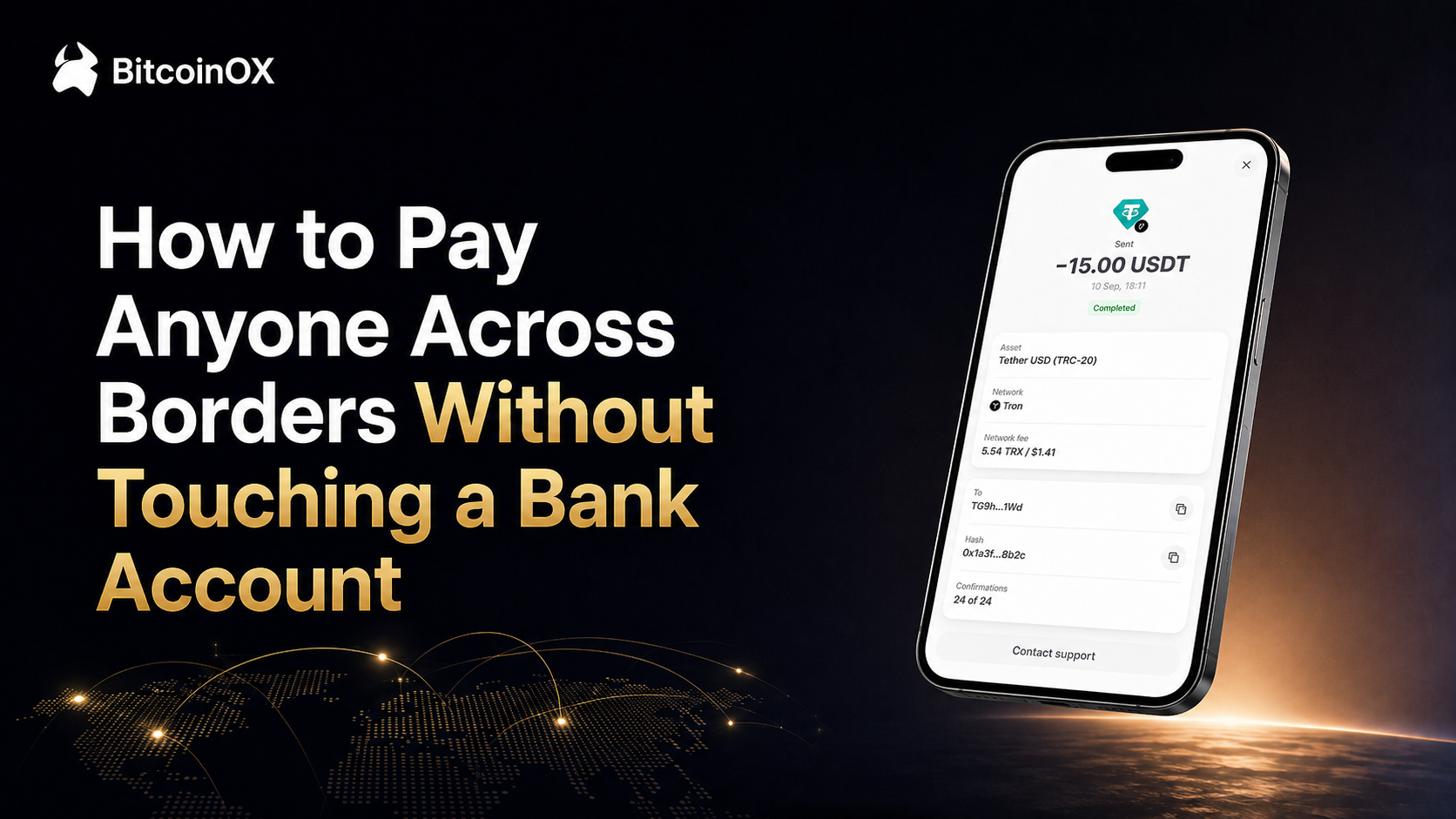
The basic process is simple. The recipient shares a crypto wallet address or QR code. The sender opens a wallet, chooses the asset, checks the network, reviews the fee, confirms the address, and sends the transaction.
A QR code makes cross-border crypto payments easier because it reduces the chance of typing a long wallet address manually. Instead of copying dozens of characters, the sender can scan the recipient’s QR code inside the wallet app and review the payment details before confirming.
For example, a freelancer may prefer to receive USDT. A long-term holder may prefer BTC. Another recipient may use ETH or LTC depending on wallet support, fees, and personal preference. The most important detail is compatibility: the asset and network must match what the recipient can actually receive.
What You Need Before Sending Crypto Internationally
Before making any cross-border crypto payments, both sides should agree on the payment details. This keeps the transaction clear and helps prevent mistakes.
- Asset: BTC, ETH, USDT, LTC, or another supported cryptocurrency.
- Network: the blockchain network the recipient’s wallet supports for that asset.
- Wallet address: copied directly or scanned through a QR code.
- Amount: agreed in crypto or calculated from a fiat value at the time of payment.
- Network fee: checked before sending, because blockchain fees can change.
- Compliance: local rules, KYC requirements, tax treatment, and platform availability where applicable.
For additional background, Bitcoin.org explains how to choose a crypto wallet, while Ethereum.org gives a useful overview of how Ethereum wallets work. These resources are helpful for understanding wallet basics before using cross-border crypto payments.
That last point matters. Crypto payments are not about avoiding legitimate requirements. They are about using a more direct payment method where it is available, supported, and appropriate.
Why a Multi-Currency Wallet Makes the Difference
A single-asset wallet may be enough for simple transfers. But international payments often require more flexibility. One recipient may want Bitcoin. Another may prefer Ethereum. A contractor may ask for USDT because it is easier to price against the US dollar.
For cross-border crypto payments, a multi-currency wallet helps by keeping supported assets in one place. Instead of switching between separate apps for each payment, users can manage multiple balances, choose the right asset for the situation, and send funds from a single wallet environment.
BitcoinOX Neo is built around this practical use case: digital asset management, crypto transfers, and crypto-funded card tools in one mobile-first product experience. For users who already earn, hold, or spend crypto, this helps reduce the gap between owning crypto and actually using it.
Who Can Benefit from Cross-Border Crypto Payments?
Freelancers and remote workers
Freelancers often work with clients across different countries, which makes cross-border crypto payments especially useful for remote work. Wallet-to-wallet crypto payments can help reduce payment friction, especially when both sides already use digital assets and agree on the correct payment details.
Digital nomads and travelers
People who move between countries often need financial tools that are not tied to one local banking system. A crypto wallet can help them manage supported assets while staying mobile.
International teams
Global teams may need to handle contractor payments, small operational expenses, or digital service costs across regions. Cross-border crypto payments can make some of these flows more direct when they are supported by both parties.
What Happens After You Receive Crypto?
Receiving crypto is only one part of the payment flow. The next question is how to use it.
Some users hold crypto in their wallet. Others transfer it, convert it where available, or use crypto-funded card tools for everyday payments. BitcoinOX Neo connects these needs by combining wallet access with virtual and physical card functionality, allowing supported crypto balances to be used in more practical payment scenarios.
This is where crypto becomes more than a balance on a screen. It becomes a payment layer that can support international work, digital subscriptions, online services, travel, and remote-first lifestyles.
Security Rules You Should Not Skip
Fast cross-border crypto payments still require careful checks. Before sending crypto internationally, follow these basic security rules:
- Confirm the recipient address before every transaction.
- Check the network carefully, especially for assets available on multiple chains.
- Send a small test transaction first when the amount is significant.
- Never share your seed phrase, private key, or recovery phrase.
- Use trusted devices and avoid suspicious payment links.
- Keep records for accounting, tax, or business documentation when needed.
Blockchain transactions are usually final once confirmed. That is why accuracy matters. The same directness that makes cross-border crypto payments useful also makes personal responsibility essential.
Bankless Does Not Mean Ruleless
Using cross-border crypto payments without a traditional bank transfer does not mean ignoring regulation. Crypto payment availability, card access, KYC requirements, AML checks, taxes, and reporting obligations can vary by country, asset, platform, and user status.
The safest approach is to treat crypto as a serious payment tool. Use it for legitimate transactions, keep records, understand your local requirements, and choose wallet products that make security and transparency part of the experience.
How BitcoinOX Neo Helps with Cross-Border Crypto Payments
BitcoinOX Neo brings together the pieces users need for practical crypto payments: a multi-chain wallet, supported digital asset management, wallet-to-wallet transfers, and crypto-funded card tools.
For cross-border crypto payments, the process can look like this:
- Create your BitcoinOX Neo account.
- Add supported crypto assets to your wallet.
- Ask the recipient for a wallet address or QR code.
- Choose the correct asset and network.
- Review the amount, fee, and address.
- Confirm the payment.
- Use supported card tools when you need to spend crypto-backed value.
It is not about replacing every financial tool in your life. It is about having a direct, mobile-first way to manage and move digital value when a traditional bank transfer feels too slow, too expensive, or too limited for the task.
Final Takeaway
Cross-border crypto payments make international transfers feel closer to how the internet works: direct, global, and available beyond banking hours. For freelancers, travelers, remote workers, and international teams, that can turn crypto from something you simply hold into something you can actually use.
When both sides use compatible wallets, agree on the right asset and network, and follow basic security and compliance rules, paying someone in another country can become much simpler. Fewer unnecessary intermediaries. Fewer bank-side delays. A clearer wallet-to-wallet payment flow.
Pay Across Borders with BitcoinOX Neo
Create your wallet, manage supported assets, and start using crypto for practical global payments.
Get StartedFAQ
How do cross-border crypto payments work?
Cross-border crypto payments work by sending supported digital assets from one wallet address to another. The recipient shares a wallet address or QR code, and the sender confirms the asset, network, amount, and transaction fee before sending.
Can I pay someone in another country with crypto?
Yes, if both sender and recipient use compatible wallets and the transaction follows the rules that apply in their jurisdictions. Always confirm the asset, network, address, and fee before sending.
Do I need a bank account to send crypto internationally?
For wallet-to-wallet transfers, a traditional bank transfer is not required for the payment itself. However, access to certain fiat, card, KYC, or conversion features may depend on product availability and local requirements.
Which crypto is best for cross-border payments?
It depends on the recipient, fees, speed, volatility, network support, and wallet compatibility. BTC, ETH, USDT, LTC, and other supported assets may be used depending on the payment situation.
Are crypto payments reversible?
Most blockchain transactions are not reversible after confirmation. Always verify the wallet address, network, and amount before sending.
Can I use BitcoinOX Neo for freelance payments?
BitcoinOX Neo can be useful for freelancers, remote workers, and international users who want to manage supported crypto payments and access wallet and card-based spending tools in one place.