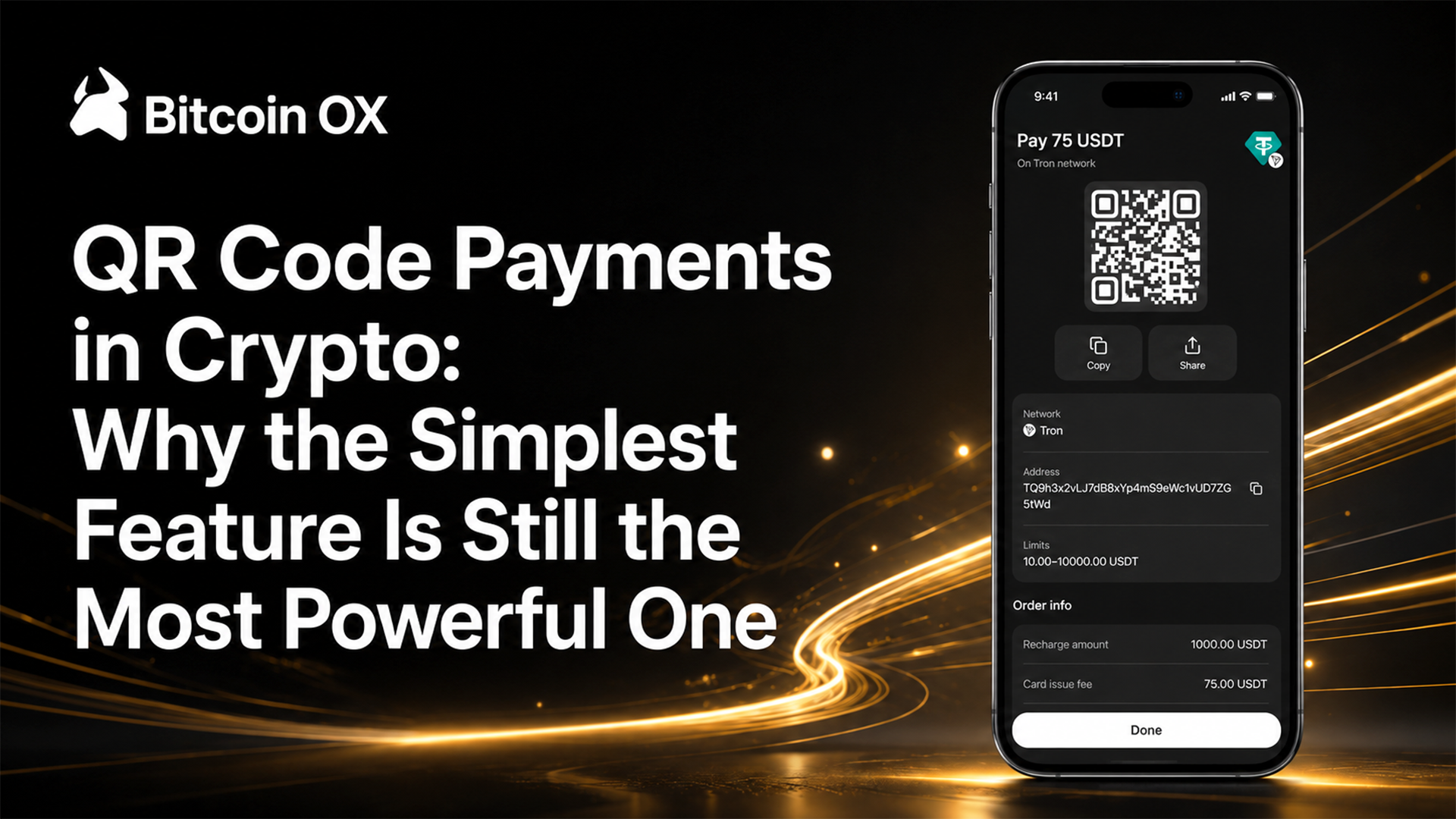
QR Code Payments in Crypto: Why the Simplest Feature Is Still the Most Powerful One
QR code payments solve one of the most practical problems in crypto: long wallet addresses are not made for human hands. They are accurate as data, but awkward as user experience. A single wrong character, wrong network, or pasted value can turn a simple transfer into a stressful moment.
That is why scanning still matters. Instead of asking someone to copy, paste, check, and explain a long address, a wallet can turn the payment request into a scannable code. The user opens the wallet, scans the code, reviews the details, and confirms the transaction.
This does not mean crypto transfers become automatic or risk-free. Users still need to verify the recipient, asset, network, amount, and fee before confirming. But QR code payments reduce unnecessary manual input, which is exactly the kind of UX improvement that helps crypto become easier to use in real life.
Start Using Crypto with BitcoinOX Neo
Manage supported digital assets, send payments, and use wallet tools designed to make everyday crypto actions easier to understand.
Get StartedWhy Crypto Needs Simpler Payment UX
Sending crypto to someone who has never done it before can quickly become a tutorial session. The sender needs to understand the asset, the wallet address, the blockchain network, the fee, the confirmation step, and what cannot be changed after sending.
That is a lot of cognitive load for a payment. It becomes even harder when the recipient is new to crypto, when the transfer is time-sensitive, or when the address is copied from a chat, email, invoice, or screenshot.
QR code payments help by moving important payment details into a format wallets can read. The user still reviews the transaction, but the payment request does not need to be typed character by character.
What Is a Crypto QR Code Payment?
A crypto QR code payment is a scannable payment request. Depending on the wallet, asset, and standard used, the code may contain a wallet address, payment URI, amount, label, or other payment details.
In the simplest case, the QR code contains a public wallet address. The sender scans it, the wallet fills the recipient field, and the sender enters the amount manually. In a more structured payment request, the QR code may also include the amount or payment note where supported.
This is why QR code payments are so useful: they turn a technical string into a user action. Scan, review, confirm. The process is still serious, but it becomes easier to complete correctly.
Technical Context
For Bitcoin payments, the BIP-21 URI scheme explains how payment links can be used by clicking a link or scanning a QR code. A newer proposal, BIP-321, also describes payment instructions designed for links and QR scanning. Wallet behavior can vary, so users should always review the transaction details before confirming.
Manual Address Entry vs QR Code Payments
The difference is easiest to see when you compare the two flows side by side.
| Payment step | Manual address flow | QR code flow |
|---|---|---|
| Recipient address | User copies or types a long wallet address. | User scans a code and the wallet fills the address field. |
| Error risk | Copy-paste mistakes, wrong address source, or edited clipboard can be harder to notice. | Manual typing is reduced, but the user still needs to verify the details on screen. |
| New user experience | Often requires explanation of address format and where to paste it. | Feels closer to familiar scan-to-pay behavior from mobile apps. |
| Speed | Slower when the sender must move between apps and copy fields. | Usually faster because scanning starts the payment flow directly. |
| Best use case | Advanced users, saved contacts, or situations where scanning is not available. | In-person payments, invoices, wallet-to-wallet transfers, and beginner-friendly flows. |
Where QR Code Payments Make the Biggest Difference
Sending crypto to beginners
If the recipient is new to crypto, a QR code can reduce the explanation burden. Instead of walking them through copying a wallet address, the payment request can be presented in a format the sender already understands: scan and review.
In-person transfers
When two people are in the same place, scanning is usually cleaner than messaging an address. This is useful for small transfers, repayment, local services, and simple wallet-to-wallet activity.
Invoices and payment requests
A QR code on an invoice can make the payment flow clearer. The sender does not need to copy a long address from a PDF or email. The code starts the wallet flow, and the sender verifies the transaction before approving it.
Cross-border payments
When sender and recipient are in different countries, cross-border crypto payments can already involve network, fee, and asset decisions. QR scanning helps simplify the address step so users can focus on verifying the important details.
Why QR Code Payments Are Still Powerful
Some features are powerful because they are advanced. Others are powerful because they remove friction. QR code payments belong to the second group.
They do not require the user to understand every technical layer before starting. They do not ask people to memorize addresses. They do not turn every transfer into a copy-paste exercise. They help wallets present crypto payments in a way that feels closer to normal mobile behavior.
This matters because the best payment experience is not the one with the most features on paper. It is the one users can complete correctly, repeatedly, and without unnecessary confusion.
Security Rules for QR Code Payments
Simple does not mean careless. Before confirming any crypto transfer, follow these rules:
- Review the recipient: confirm the address or contact shown in the wallet.
- Check the asset: make sure you are sending the intended cryptocurrency.
- Check the network: the sending and receiving networks must be compatible.
- Review the amount: verify the amount before confirming.
- Check fees: network fees can change depending on demand.
- Avoid unknown codes: do not scan QR codes from suspicious sources.
- Use trusted wallet apps: install wallet software only from official sources.
A QR code is only a way to pass payment information into the wallet. It does not guarantee that the payment request is safe or correct. The wallet screen is still the final checkpoint.
QR Codes Reduce Copy-Paste Risk, Not Responsibility
Manual copy-paste creates room for mistakes. A user may copy only part of an address, paste an outdated address, choose the wrong network, or send from the wrong account. In some cases, malware can also try to interfere with clipboard content.
QR code payments reduce the need to move wallet addresses between apps. That is valuable, but it is not a replacement for transaction review. The user should still compare the details shown in the wallet with the intended recipient and payment request.
The right message is balanced: QR scanning improves usability and reduces manual address handling, while responsible confirmation keeps the payment process safer.
How BitcoinOX Neo Fits Into QR Code Payments
BitcoinOX Neo is a mobile-first crypto wallet and payment platform designed to help users manage supported digital assets and use crypto for practical payments. A wallet experience like this needs to make everyday actions easier, not harder.
QR scanning fits that product direction. It supports a simpler payment flow for users who want to send or receive supported crypto without turning every transaction into a technical lesson. Instead of forcing people to handle long addresses manually, the wallet can make the payment request easier to start and easier to review.
BitcoinOX Neo also connects wallet management with broader payment use cases, including virtual and physical card functionality where available. For users who move between holding, sending, and spending crypto, cleaner payment UX is not a small detail. It is part of making digital assets usable.
For more product context, read the BitcoinOX Neo FAQ and the BitcoinOX guide to private key crypto wallet ownership.
When QR Code Payments Are Not Enough
QR codes make the address step easier, but they do not solve every payment problem. A user still needs the right asset, correct network, sufficient balance, enough fee coverage, and a compatible receiving wallet.
There are also situations where a saved contact, internal transfer, payment link, invoice system, or card payment may be more appropriate. The best payment flow depends on who is paying, who is receiving, which asset is used, and what the payment is for.
This is why a strong wallet should not rely on one feature alone. QR code payments are powerful because they simplify a common action. They work best when combined with clear transaction screens, address verification, fee visibility, and sensible wallet design.
The Three-Step Framework: Scan, Review, Confirm
The safest way to think about QR code payments is not scan and forget. It is scan, review, confirm.
- Scan: use the wallet camera or built-in scanner to read the payment request.
- Review: check the recipient, asset, network, amount, and fee.
- Confirm: approve only when the details match your intention.
This framework keeps the user experience simple without weakening the security habit. Scanning reduces manual work. Reviewing protects against assumptions. Confirming completes the transaction only after the user checks what matters.
Final Takeaway
QR code payments are still one of the most powerful features in crypto because they solve a basic UX problem. They make wallet addresses easier to handle, reduce unnecessary copy-paste steps, and help new users complete payments with more confidence.
The feature is simple, but that is the point. Crypto becomes more useful when people can send and receive value without turning every payment into a tutorial. Open wallet, scan, review, confirm. That is the kind of flow people can actually use.
Try a Simpler Crypto Payment Flow
Use BitcoinOX Neo to manage supported digital assets and access wallet tools built for practical crypto payments.
Get StartedFAQ
What are QR code payments in crypto?
QR code payments in crypto use a scannable code to pass payment information, such as a wallet address or payment request, into a wallet app.
Are QR code payments safer than copying wallet addresses?
They can reduce manual entry and copy-paste mistakes, but users still need to review the recipient, asset, network, amount, and fee before confirming.
Can a crypto QR code include the payment amount?
Some wallet standards and payment URI formats can include amount or label information, depending on the asset, wallet, and supported format.
Can I send crypto to someone by scanning their QR code?
Yes, if your wallet supports scanning and the recipient provides a compatible wallet address or payment request. Always verify the details before sending.
Do QR codes remove blockchain fees?
No. A QR code only helps pass payment information into the wallet. Network fees still depend on the blockchain, transaction conditions, and wallet settings.
Why are QR code payments useful for beginners?
They reduce the need to manually copy long wallet addresses, which makes the first payment flow easier to understand and complete.
Make Crypto Payments Easier to Start
Use BitcoinOX Neo to manage supported digital assets and access wallet tools designed for practical everyday crypto payments.
Get Started